Medicilon offers comprehensive toxicology study services designed to assess the safety profile and potential risks of pharmaceutical compounds. Our expert team collaborates closely with clients to tailor studies according to regulatory requirements and project-specific needs.
Our state-of-the-art facilities, advanced platform, experienced scientists, and commitment to quality ensure that clients receive high quality, reliable, and regulatory-compliant GLP toxicology data to support the development of safe and effective pharmaceutical products.
As of the end of June 2026, Medicilon has provided drug R&D services to over 2,000 clients globally and has supported ~700 IND approvals.
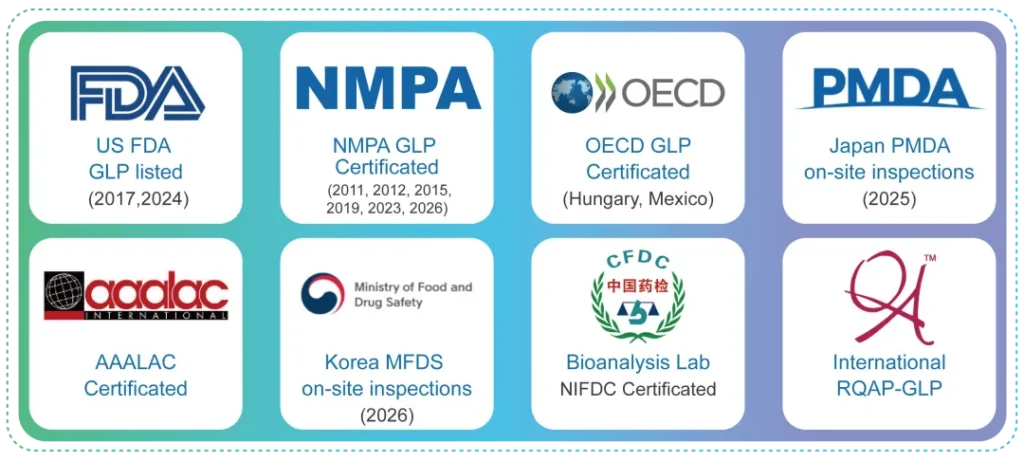
Professional Qualifications
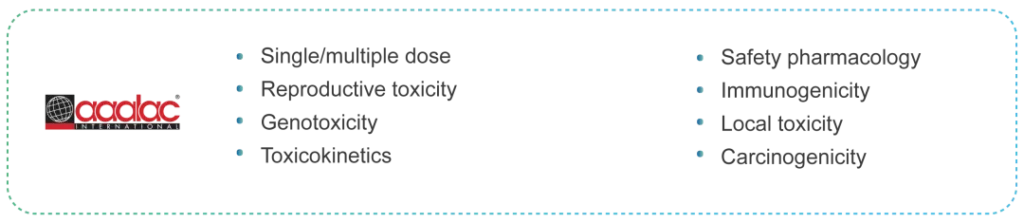
Non-GLP & GLP Toxicology Studies
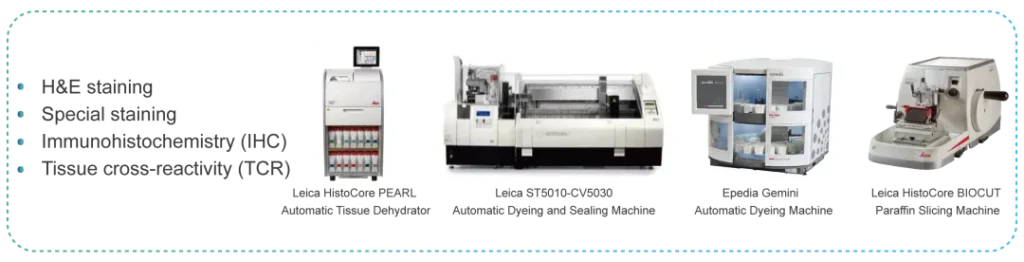
Histopathology
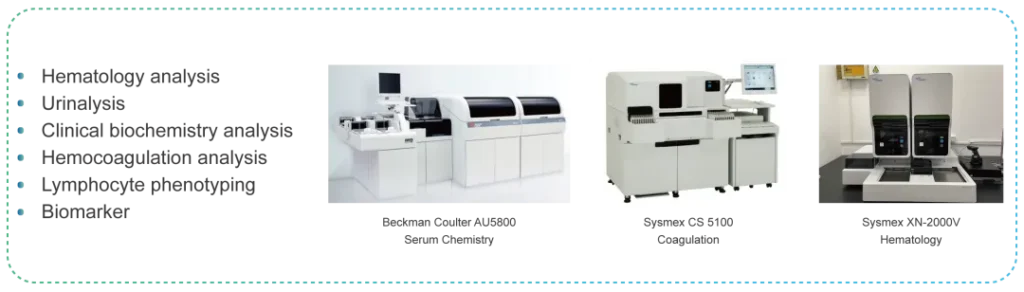
Clinical Pathology
Special Formulation / Dosing Route
Case Study 1
PTX-HSNs are Paclitaxel-loaded hyaluronan solid nanoemulsions for CD44-overexpressing ovarian cancer. This case highlights Medicilon’s integrated toxicity evaluation capabilities for nanomedicine safety assessment.
Medicilon provided in vivo toxicity and pharmacokinetic studies. All in vivo experiments were conducted with the approval of the AAALAC International (tested at Medicilon/MPI Preclinical Research).
The in vivo pharmacokinetics of PTX was determined in male SD rats at Medicilon/MPI Preclinical Research. The terminal t1/2 and MRT of the PTX-SNs and PTX-HSNs were significantly lower than those of Taxol (P<0.05). The Vss values of the PTX-SNs and PTX-HSNs were also significantly lower than those of Taxol (P<0.05). As the Vss value of PTX-HSN was about six times lower than that of Taxol, PTX-HSNs may present a narrower tissue distribution profile than that of Taxol.
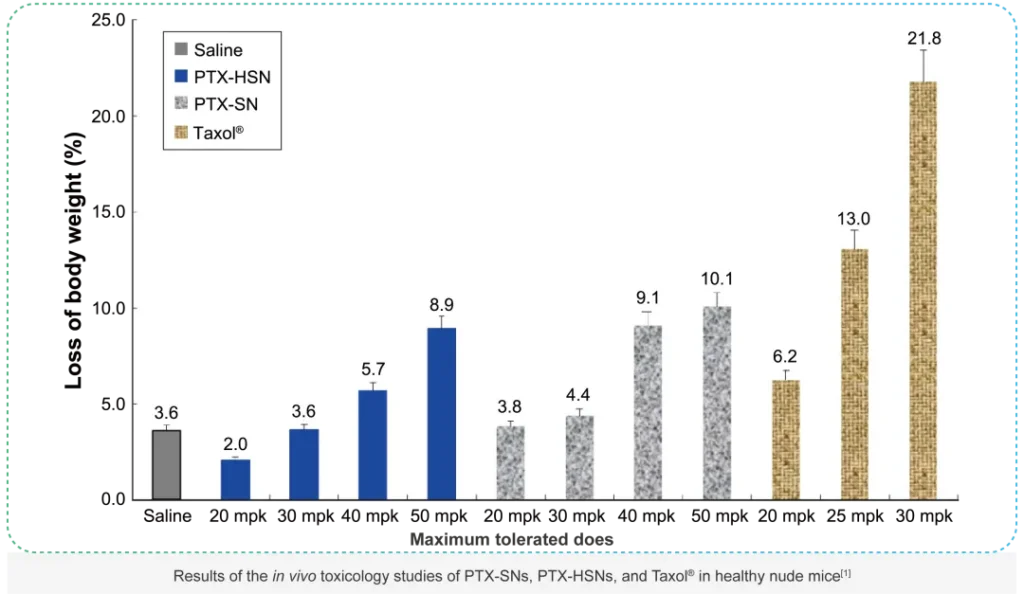
Female BALB/c nude mice received repeated caudal-vein injections of Taxol, PTX-SNs, or PTX-HSNs at 20-50 mg PTX/kg (three doses at 3-day intervals). Body weight, clinical signs, mortality/moribundity, and necropsy findings were monitored over 15 days. Taxol at 30 mg/kg caused approximately 20% body-weight loss, dyspnea, lethargy, ataxia, and three deaths.
In contrast, PTX-HSNs at 50 mg/kg produced ≤10% body-weight change, no significant clinical signs, and no mortality. PTX-SNs at 50 mg/kg showed significant clinical signs and two premature deaths. The MTD was therefore <30 mg/kg for Taxol versus >50 mg/kg for PTX-HSNs, approximately a 2.5-fold improvement in tolerability.
Case Study 2
YYB-101 is a humanized anti-hepatocyte growth factor (HGF) neutralizing antibody for HGF/cMET-driven cancers. To support clinical development, the preclinical pharmacokinetics, toxicokinetics (TK), and anti-drug antibody (ADA) evaluation in cynomolgus monkeys were conducted by the Test and Control Article Department of Medicilon Preclinical Research, LLC in accordance with the USDA Animal Welfare Act and The Guide for the Care and Use of Laboratory Animals. This case highlights Medicilon’s large-molecule tox/TK and immunogenicity assessment capability in non-human primates.
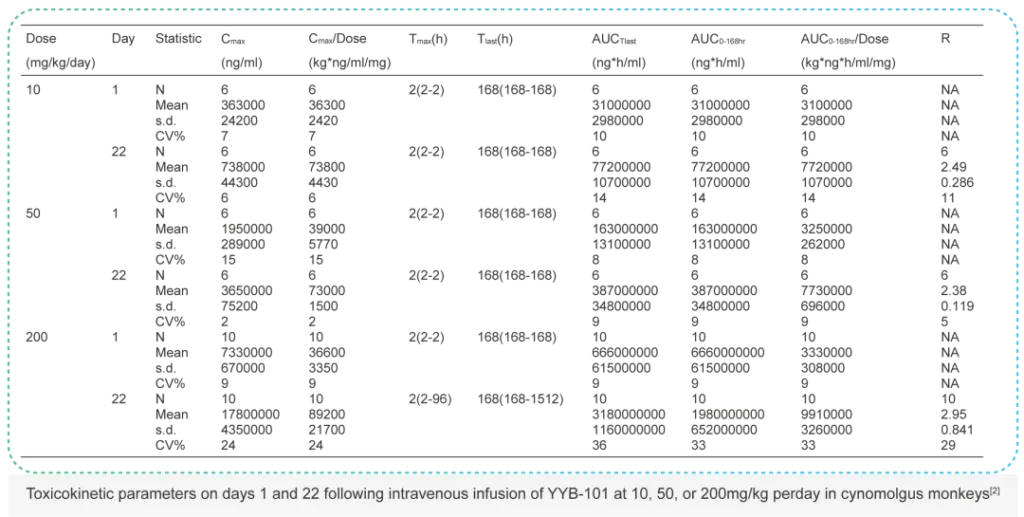
In the single-dose PK study, four male cynomolgus monkeys (3-5 years old) received 10 mg/kg. In the repeat-dose TK study, cynomolgus monkeys received YYB-101 at 10, 50, or 200 mg/kg/day once weekly for four infusions (Day 1, 8, 15, and 22).
Following intravenous administration of YYB-101, the mean systemic exposure (AUC0-168 h) and Cmax values of YYB-101 increased proportionally with dose. The mean peak and trough serum concentrations of YYB-101 appeared to approach steady state following the four weekly infusions of YYB-101.Serum concentrations were quantifiable in recovered animals 63 days after the last dose (~2.8% of Cmax from day 22). Systemic exposure (AUC0-168 h) increased with repeated intravenous administration of YYB-101, with accumulation ratios ranging from 2.38 to 2.95.
References:
[1] Joo-Eun Kim , Young-Joon Park. Paclitaxel-loaded hyaluronan solid nanoemulsions for enhanced treatment efficacy in ovarian cancer. Int J Nanomedicine. 2017 Jan 17:12:645-658. doi: 10.2147/IJN.S124158.
[2] Hyori Kim, et al. Preclinical development of a humanized neutralizing antibody targeting HGF. Exp Mol Med. 2017 Mar 24;49 (3):e309. doi: 10.1038/emm.2017.21.