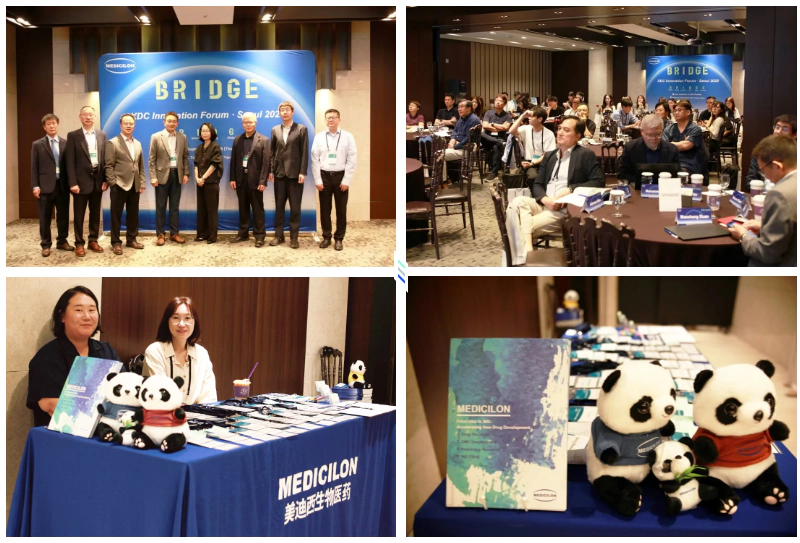
Medicilon successfully hosted the BRIDGE | Medicilon XDC Innovation Forum · Seoul 2026 in Seoul, Korea, on September 10, 2026. The forum united Chinese and Korean XDC experts, scholars, and industry leaders who shared insights, practical experience, and innovative strategies to accelerate XDC drug development through solution-focused presentations.
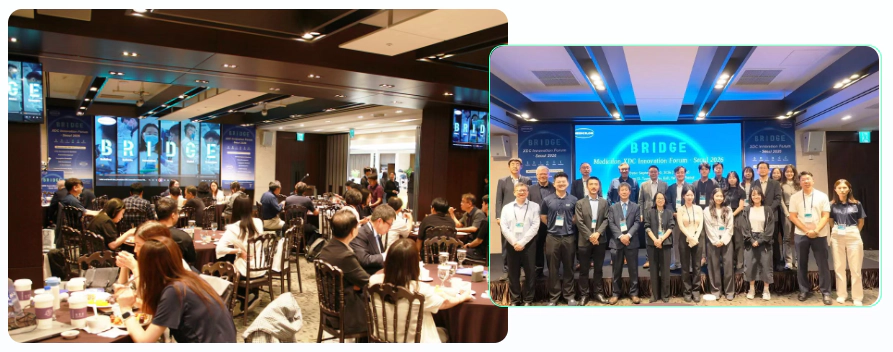
Opening Remarks : Medicilon XDC Innovation Forum
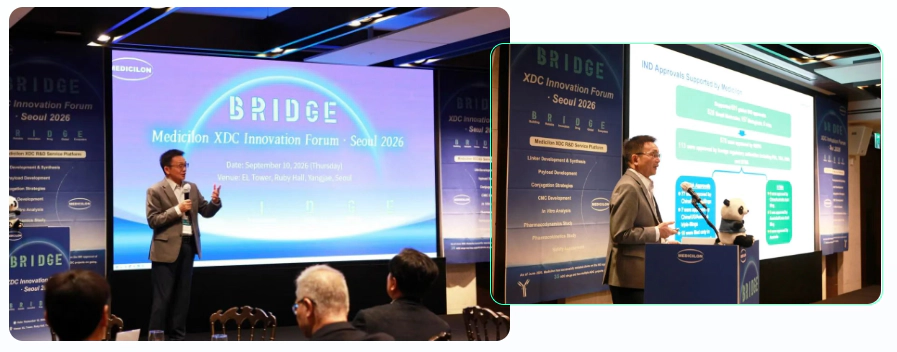
President of Drug Discovery & CMC Divisions
Medicilon
Dr. Maosheng Duan, President of Drug Discovery & CMC Divisions at Medicilon, presented the company’s comprehensive, chemistry-driven, one-stop drug R&D platform.
With 22 years of global experience, Medicilon supports drug discovery, preclinical evaluation, CMC, and IND filing, including complex conjugated drugs like XDC. Their XDC expertise spans linker/payload design, conjugation, formulation, preclinical evaluation, and IND filing, contributing to hundreds of global IND approvals, many for ADC projects. Dr. Duan highlighted their linker and payload synthesis capabilities, offering various linker intermediates and libraries (enzyme-cleavable, hydrophilic, site-specific) and accommodating diverse conjugation strategies. He also showcased Medicilon’s technology platforms for peptides, bifunctional molecules, RNAi/AOC, and AIDD, demonstrating their robust, chemistry-driven innovation in XDC development from research to clinical application.
Presentations : Medicilon XDC Innovation Forum
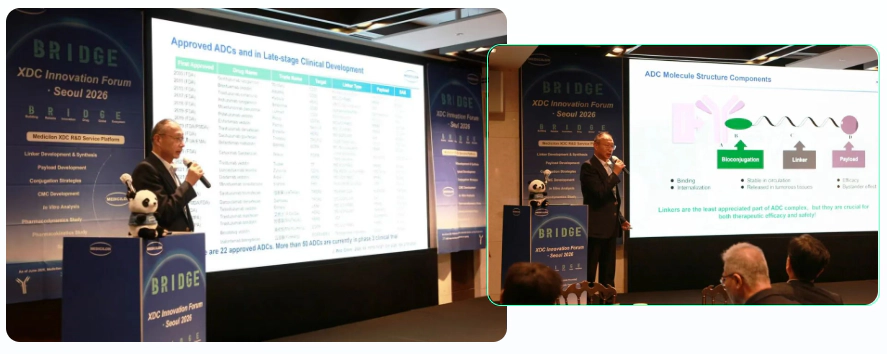
VP of Drug Discovery
Medicilon
Dr. Steven Zhang’s presentation, “Linker Development and Future Prospects,” reviewed the evolution and future of ADC linkers.
He emphasized that linkers, despite often being underestimated, critically influence conjugation, DAR, stability, hydrophilicity, ADME, and payload release. He detailed non-cleavable and cleavable linkers, including VC dipeptide, GGFG tetrapeptide, and novel triggers like β-glucuronidase.
To counter hydrophobic aggregation and PK issues, he presented hydrophilic linkers such as PEG, Exo-PEG, and PSAR, noting Exo-PSAR12’s superior performance. He also discussed new peptide linker technologies like EVCit, EGCit, dual-enzyme triggers, and the plasma-stable, tumor-specific TMALIN (VK*G) dual-cleavage mechanism, which has moved several projects to clinical stages.
Dr. Zhang concluded by envisioning “intelligent responsive” linkers that activate in the tumor microenvironment. He foresees chemical innovations overcoming hydrophobicity, reducing immunogenicity, and expanding to RDC, AOC, and other XDC modalities, with AI and high-throughput experimentation optimizing performance for precise release control.
VP of Drug Discovery
Medicilon
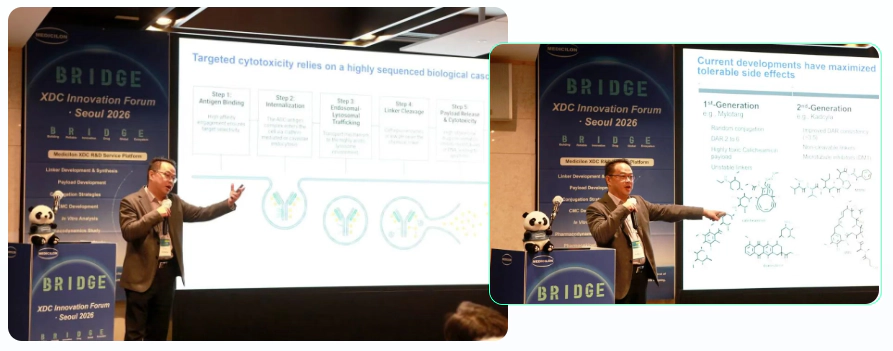
Dr. Tai-Wei Ly presented on the evolution of ADC warheads, outlining three generations.The first, exemplified by Mylotarg, used highly toxic calicheamicin with random conjugation.The second, including Kadcyla, featured non-cleavable linkers and DM1.The third generation, with Enhertu and Trodelvy, advanced to site-specific conjugation, stable DAR 8, and Topo I inhibitors, yet still faces toxicity issues like ILD and myelosuppression. Highly potent warheads persist due to limitations in drug delivery to tumors.
To overcome these, Dr. Ly introduced antibody-bottlebrush conjugates (ABCs) for high DAR and reduced toxicity via PEG shielding, and payload sequencing or dual-payload ADCs to combat drug resistance. He noted the expansion of novel payloads, including NMT inhibitors, DDR inhibitors, STING/TLR agonists, PROTAC degraders, and AOCs. Early ISACs faced CRS issues, but next-generation ISACs like TAC-001 show improved safety through tumor microenvironment-restricted activation.
Dr. Ly concluded that the XDC modality is evolving from chemical disruption to systemic regulation, where the antibody, linker, and payload function as an integrated biological system, requiring a holistic design approach for future advancements.
Director of R&D Division
AbTis
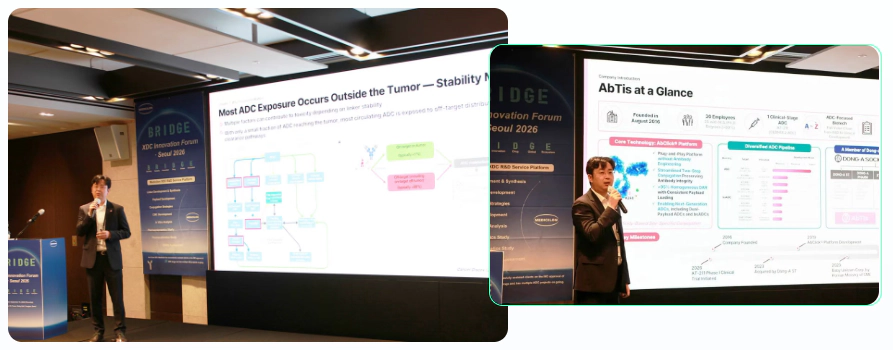
Dr. Juhwan Kim’s presentation, “ADC Conjugation Technologies: Current Strategies and Future Perspectives,” highlighted conjugation as a critical design element influencing ADC efficacy and safety. He reviewed the advantages and disadvantages of site-specific conjugation strategies, such as lysine, cysteine, enzymatic, glyco-remodeling, and non-natural amino acid approaches. Kim introduced AbTis’s proprietary AbClick® platform, an affinity-directed, site-specific conjugation method that bypasses antibody engineering or enzyme treatment. This two-step chemical conjugation achieves highly homogeneous Drug-to-Antibody Ratio (DAR) at the antibody K248 site, is compatible with various antibody formats and payload types, and offers strong CMC reproducibility and regulatory feasibility. He concluded that as ADCs advance toward multi-payload, multi-target, and more complex XDC architectures, the need for precise, orthogonal, and reproducible conjugation will escalate, making site-specific conjugation a necessity for future XDC development.
VP of Formulation & Regulatory Affairs
Medicilon
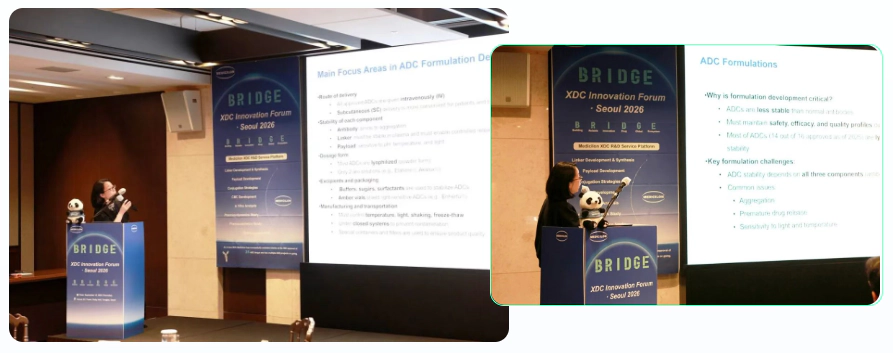
Dr. Dan Wang, in her presentation “XDC Formulation Strategies: From IV to Innovative Routes,” emphasized that XDC stability is a balance of antibody, linker, and payload, crucial for safety, efficacy, and quality. While most approved ADCs are lyophilized IV products, she explored strategies to expand XDC delivery beyond IV to subcutaneous (SC), inhaled, oral, and topical routes. This diversification aims to minimize systemic exposure, boost patient compliance, and lower toxicity. SC administration, for instance, can reduce Cmax-related toxicity via sustained release, though it faces challenges like macromolecule permeation and enzymatic degradation, requiring site-specific conjugation for optimal solubility and stability. Inhaled delivery necessitates particle size control and optimized nebulization, with nanobody-drug conjugates showing promise. Oral delivery, ideal for peptide-drug conjugates, requires modifications like cyclization and enteric coatings to bypass gastrointestinal barriers. Topical application requires overcoming the stratum corneum, potentially using cell-penetrating peptides. In conclusion, while IV remains the primary XDC route, advancements in design and formulation are paving the way for alternative delivery methods, promising improved patient outcomes.
Director of API Process
Medicilon
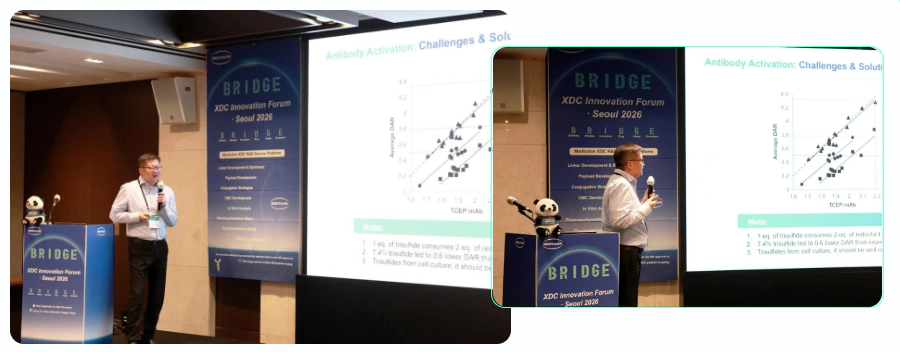
Dr. Zhen Rao presented on “Process Development and Quality Control for ADC,” detailing the manufacturing process from antibody activation to formulation, alongside an integrated control strategy. He highlighted key challenges in ADC development, including precise DAR control, product heterogeneity, off-target conjugation, aggregation, and impurity removal. Robust processes necessitate precise control of antibody concentration, reducing agent use, and optimized conjugation parameters, followed by efficient UF/DF and chromatography purification. Quality control must address critical attributes such as DAR distribution, conjugation sites, free drug, aggregates, residual solvents, and biological activity. Rao stressed that as next-generation ADC technologies emerge, process and analytical development must evolve concurrently to ensure robust manufacturing and consistent product quality.
VP of Pharmacology
Medicilon
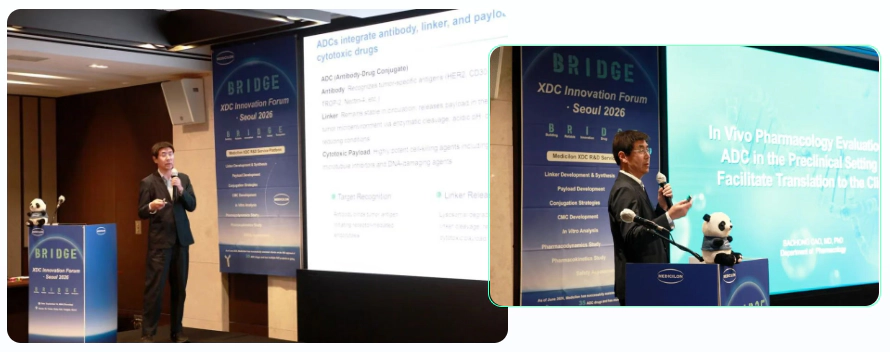
Dr. Baohong Cao gave a presentation titled “In Vivo Pharmacology Evaluation of ADC in the Preclinical Setting to Facilitate Translation to the Clinic.” He systematically introduced the mechanism of action of ADCs from target recognition and linker release to cytotoxic killing, as well as the trends in three generations of ADC evolution: site-specific conjugation becoming mainstream, improved DAR homogeneity, and reduced off-target toxicity. He analyzed the rapid growth of the ADC market and frontier XDC directions, including bispecific ADCs, dual-payload ADCs, AOCs, RDCs, and PROTACs, noting that safety, drug resistance, CMC complexity, and therapeutic window remain major challenges. In preclinical evaluation, Medicilon has established a comprehensive platform covering cell line-derived xenografts, syngeneic models, PDX, humanized mice, and orthotopic/systemic models, supporting efficacy evaluation, PK/PD analysis, and biomarker detection of ADCs in various tumor models. The company has completed over 500 related studies, covering conjugates such as Herceptin-MMAE, and is equipped with advanced instruments including microCT, IVIS, and flow cytometry, providing systematic support for ADC translation from lab to clinic.
VP of Toxicology
Medicilon
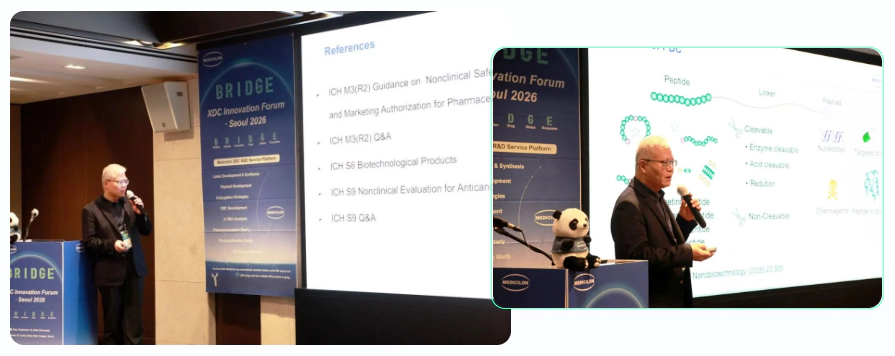
Dr. Renzong Xie presented on “Modern Approaches to Toxicological Assessment of XDC,” outlining strategies for XDC toxicology. He explained that XDC comprises a targeting moiety, linker, and payload. Toxicology design must adhere to guidelines like ICH M3(R2), S6, and S9, considering appropriate animal species (rodent/non-rodent or NHP) for both targeting moiety and payload. Key factors in toxicity assessment include plasma stability, FcγR/FcRn-mediated non-specific endocytosis, payload/linker novelty, and DAR changes’ impact on PK and toxicity. For ADCs, simultaneous measurement of ADC and free payload levels, along with free antibody estimation, is recommended. He summarized common ADC toxicities affecting lymphohematopoietic tissues, skin, eyes, liver, kidney, testes, and the gastrointestinal tract, and shared GLP toxicology case studies. Dr. Xie stressed that XDC toxicology assessment requires integrating targeting, linker, and payload elements with relevant animal species and dosing strategies to support clinical translation.
Head of the ADC Research Institute
LigaChem Biosciences
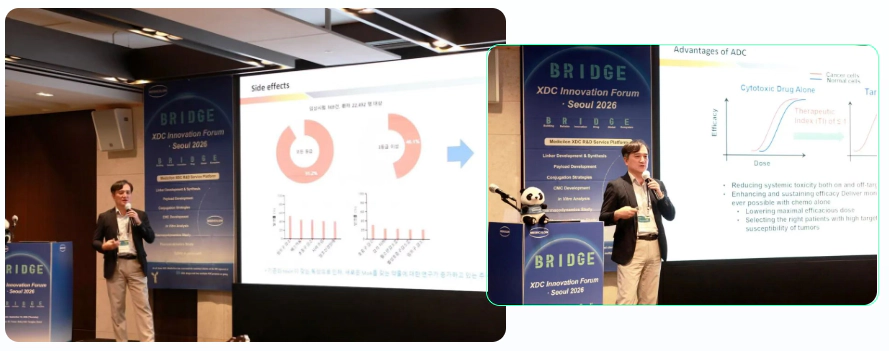
Dr. Chul-Woong Chung’s presentation, “Designing ADCs: Key Considerations and Trade-offs,” systematically explored crucial aspects of ADC design across four dimensions: target, linker, payload, and conjugation strategy. He emphasized that ADCs enhance the therapeutic window by precisely delivering cytotoxic payloads, though toxicity can still arise from non-specific payload release and off-target antibody uptake. Resistance mechanisms include target heterogeneity, insufficient linker stability, and altered payload pathways. In target selection, HER2, TROP2, B7-H3, and CLDN18.2 remain prominent single targets, with CDH17 emerging as a new focus. Dual-target ADCs feature combinations like c-MET×EGFR, EGFR×HER3, and HER2×HER2, alongside the rising Nectin-4×TROP2. Both cleavable and non-cleavable linkers have advantages and disadvantages. Early ADCs faced issues with DAR heterogeneity, imbalanced efficacy/toxicity, and linker instability. LCB is advancing next-generation low-DAR, site-specific, dual-payload, and bispecific ADC innovations through its Next ConjuALL™ platform.
Exchange : Medicilon XDC Innovation Forum