
Home » Large Animal DMPK Services
Large Animal Models DPMK Services for High-Quality Preclinical Research
Large Animal Studies
Speak With a Large Animal DMPK Expert
Research Animal Types
Large-Animal Capability
Species
Capacity
- Mini-Pig
Up to 300
- Beagle Dogs
Up to 1700
- NHP
2,200
- Cynomolgus Monkeys
2,000
- Rhesus Monkeys
200
Preclinical excellence
End-to-End ADME, PK, and Safety Support for Drug Candidates
By integrating Large Animal DMPK Services with in vitro ADMET and PK/PD modeling, Medicilon helps build a coherent, science-driven story from early discovery through IND enabling.
Our large animal capabilities:
What is the systemic exposure and clearance profile in relevant non-rodent species?
How do tissue distribution and excretion patterns support target engagement and safety margins?
What non-GLP toxicology data are needed to support dose range finding and MTD assessments?
How well do large animal results align with rodent and in vitro findings for translational modeling?
Role of Large Animal DMPK Studies in Preclinical Development
Bridging Small Animal Data to Human Translation
Rodent studies are invaluable, but regulators and project teams expect non-rodent data to understand human risk. Large animal studies:
- Provide more human-like physiology for PK, metabolism, and safety
- Support dose selection and exposure margins
- Enable evaluation of clinical administration routes and formulations
Our Large Animal DMPK Services are designed to bridge rodent findings with human projections, aiding decision-making on candidate selection and FIH (first-in-human) dosing.
Meeting Regulatory Expectations for IND-Enabling Packages
Regulatory agencies expect non-rodent DMPK and safety data as part of IND and CTA submissions. Through our well-designed large animal studies, you will get insight on:
- Characterize exposure, accumulation, and clearance
- Understand metabolite profiles and excretion pathways
- Define NOAEL/MTD and initial safety margins for clinical trials
This makes Medicilon’s Large Animal DMPK Services a key part of an integrated IND strategy.
Large Animal Species and Study Types Available at Medicilon
Non-Rodent Species for DMPK: Dog, Monkey, Mini-Pig and More
Medicilon’s in vivo team supports a broad range of species to fit program needs:
- NHP (Cynomolgus Monkeys, Rhesus Monkeys)
- Beagle dog
- Mini-pig
- Additional small animals (mouse, rat, guinea pig, rabbit) when cross-comparison is needed
Our Large Animal DMPK Services take advantage of these species to generate robust, translational data.
Flexible Study Designs: Single, Multiple, and Cassette Dosing
The studies are designed to match your stage, compound supply, and decision points:
- Single-dose PK for initial exposure and clearance
- Multiple-dose studies to evaluate accumulation and steady-state
- Cassette dosing (where appropriate) to rank compounds and conserve resources
- Serial blood microsampling strategies help reduce animal use while maximizing data points.
Administration Routes for Real-World Clinical Simulation
To align with future clinical use, Medicilon offers a variety of administration routes in large animals:
- Intravenous (IV)
- Oral (PO)
- Subcutaneous (SC)
- Intramuscular (IM)
- Intraperitoneal (IP)
- Topical and transdermal
- Intrathecal (IT)
Our Large Animal DMPK Services simulate planned clinical routes to provide more relevant PK and safety data.
In vivo, surgical, dmpk, in vitro
More Large Animal Capabilities
In Vivo PK and Non-GLP Toxicology Capabilities in Large Animals
solutions
Pharmacokinetic Profiling and Serial Blood Microsampling
Medicilon routinely conducts full PK profiles in large animals, including intensive early timepoints and extended sampling windows. Serial microsampling allows:
- High-resolution concentration–time curves
- Reduced animal numbers
- Efficient comparison of IV vs PO or other routes
These PK profiles are central to our Large Animal DMPK Services.
Tissue Distribution, Mass Balance, and Excretion Studies
We support detailed ADME characterization, including:
- Tissue distribution in key organs
- Mass balance studies with excretion via urine, feces, and bile
- In vivo metabolite identification and quantitation
These data help identify metabolite species, assess accumulation, and address regulatory questions about metabolite safety.
Non-GLP Tox, MTD, and DRF to Define Safety Windows
Medicilon’s non-GLP capabilities include:
- Non-GLP toxicology studies
- Maximum tolerated dose (MTD) studies
- Dose range finding (DRF)
Coupled with PK data, these Large Animal DMPK Services define preliminary safety windows and inform GLP tox design.
Advanced Surgical and Sampling Techniques in Large Animals
solutions
Venous and Biliary Cannulation and Infusion Pump Support
Our surgical teams perform specialized procedures to enable advanced PK and ADME studies:
- Venous cannulation for reliable sampling or infusion
- Biliary cannulation to study biliary excretion and enterohepatic circulation
- Infusion pump support for constant-rate or complex dosing regimens
These capabilities expand the scope of our Large Animal DMPK Services, especially for challenging compounds and modalities.
Liver, Skin, Adipose, Bone marrow, Lymph nodes and Muscle Biopsy Techniques in Dogs and Monkeys
Medicilon has established liver, skin, adipose, bone marrow, lymph nodes and muscle biopsy techniques in monkeys and dogs, guided by B-ultrasound or surgical approaches.
- Multiple liver biopsies per animal with typical collection amounts
- Muscle biopsies from quadriceps for local exposure or biomarker analysis
These procedures are especially valuable for oligonucleotide and gene-modifying therapies where tissue exposure is critical.
Serial Biopsy Strategies for Oligonucleotides and siRNA
For oligonucleotide and siRNA programs, Medicilon offers serial biopsy strategies with controlled recovery intervals (e.g., 2 – 3 weeks, depending on the design) and careful body weight selection (e.g., monkeys 3 – 6 kg; dogs 8 – 12 kg).
This allows repeated assessment of:
- Tissue drug concentrations
- PD biomarkers
- Histopathology changes over time
These advanced sampling strategies are a cornerstone of our Large Animal DMPK Services for nucleic acid therapeutics.
Large Animal DMPK Services for the Emerging Modalities
solutions
ADC and Biologics PK in Cynomolgus Monkeys
Medicilon has experience running ADC PK studies in cynomolgus monkeys with comprehensive sampling schedules and multi-analyte bioanalysis.
Typical features include:
- Single IV dosing in cynomolgus monkeys
- Serum/plasma sampling from minutes to weeks post-dose
- Measurement of ADC, total antibody (Tab), and payload via ELISA and LC-MS/MS
These Large Animal DMPK Services help characterize complex biologics, including linker stability and payload release.
siRNA and Oligonucleotide PK/PD with Biopsy-Based Readouts
For siRNA and oligonucleotides, we combine systemic PK data with tissue biopsies (liver, muscle) to track:
- Tissue drug concentrations over time
- Target knockdown and other PD endpoints
- Local tolerability at injection or infusion sites
Our Large Animal DMPK Services for nucleic acid therapeutics support the growing field of RNA- and DNA-based drugs.
Radiolabeled Studies (125I/14C/3H) for Drug Metabolism
Medicilon also supports studies using radiolabeled compounds (e.g., 125I, 14C, 3H) to investigate:
- Drug metabolism and metabolite profiling
- Mass balance and excretion pathways
- Tissue distribution with high sensitivity
These radiolabeled Animal DMPK Services are powerful for complex ADME questions and regulatory submissions.
In Vitro ADMET Support to Complement Large Animal and Human Studies
solutions
Metabolic Stability, Enzyme Inhibition, and Induction Assays
Medicilon complements large animal and human work with a full suite of in vitro ADMET assays:
- Liver microsome, S9 fraction, and hepatocyte stability
- CYP450 enzyme inhibition and time-dependent inhibition (TDI)
- CYP450 induction and enzyme phenotype analyses
- In vitro metabolite identification and pathway elucidation
These data integrate with Large Animal DMPK Services to support translational modeling and DDI risk evaluation.
Transporter Studies and CNS/BBB Penetration
Our transporter and permeability assays include:
- P-gp, BCRP, OATs, OCTs, OATPs, MATEs, BSEP
- Permeability and efflux assays
- BBB penetration studies and Kp,uu measurements
These capabilities help interpret CNS safety, efficacy, and drug-drug interaction risk alongside large animal PK data.
Plasma Protein Binding, Distribution, and hERG / Safety Screens
Additional in vitro services include:
- Plasma protein binding and plasma/serum stability
- Whole blood/plasma distribution
- hERG liability screening
- Mini-Ames and other early-risk assessments
These in vitro studies and Large Animal DMPK Services build a comprehensive risk-benefit profile.
Industry state-of-the-art standard
Quality, Compliance, and Animal Welfare
Medicilon strictly follow offical guideline for quality, compliance, and animal welfare

AAALAC-Certified Facilities and Experienced Study Teams
Medicilon operates AAALAC-certified facilities and adheres to global standards of animal welfare and ethical research.
This ensures:
- High-quality, reproducible data
- Humane animal care
- Strong alignment with regulatory and sponsor expectations
Robust Bioanalysis with LC-MS/MS and ELISA Platforms
Our bioanalytical group supports large animal studies with:
- LC-MS/MS for small molecules and payloads
- ELISA methods for ADCs, antibodies, and proteins
- Validated and fit-for-purpose methods for multi-analyte studies
This integrated bioanalysis is a critical part of our Large Animal DMPK Services and accelerates data turnaround.
Large animal model science-driven
Case Studies:
Beagle Dog PK Study for Small Molecules
Example design:
- Species: Beagle dog
- Groups: 2 groups, 3 dogs/group
- Dosing:
- IV, 0.5 mg/kg, single dose
- PO, 1 mg/kg, single dose
- Sampling: Pre-dose and multiple post-dose timepoints up to 24 h for both routes
Bioanalysis: LC-MS/MS
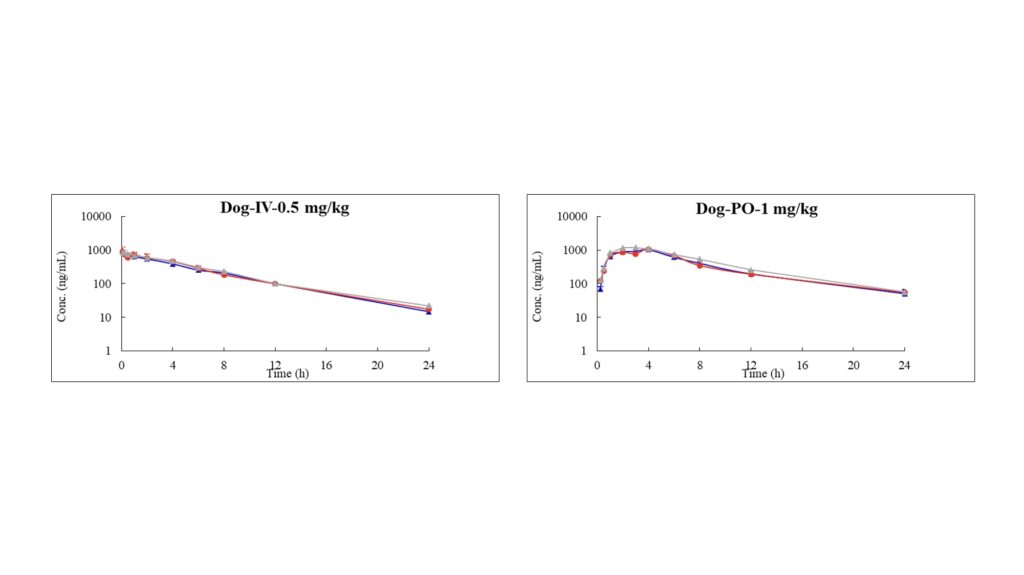
The plasma concentration–time profiles showed high consistency between individual animals, demonstrating the reliability of our Large Animal DMPK Services.
ADC Cynomolgus Monkey PK Study
Example design:
- Species: Cynomolgus monkey
- Group: 1 group, N = 3 males
- Dosing: IV, 1 mg/kg, single dose
- Sampling: From 0.25 h out to 336 h post-dose
- Analytes: ADC and total antibody (ELISA), plus payload (LC-MS/MS)
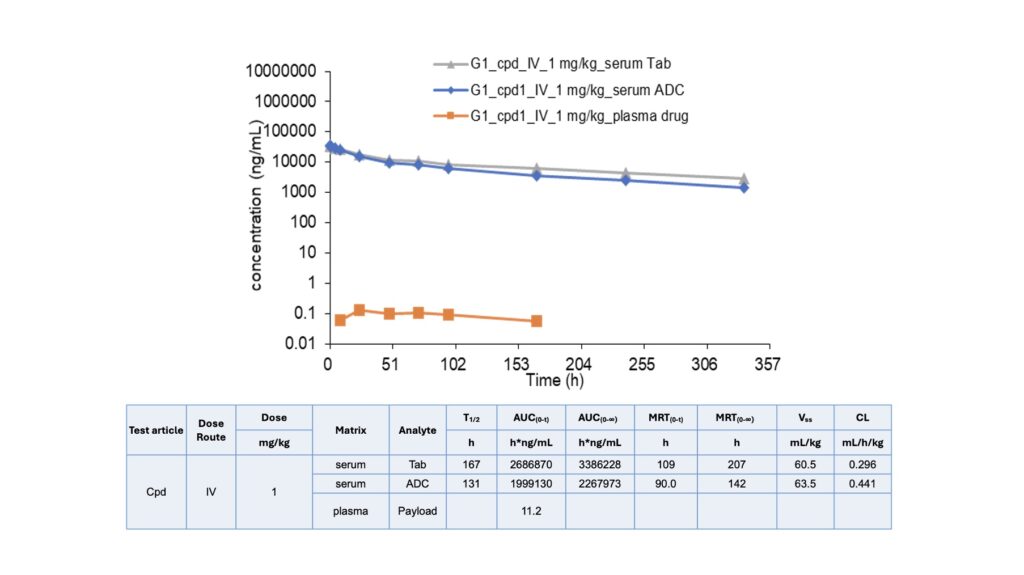
This design supports long-term PK profiling and linker–payload behavior in a relevant non-rodent species.
Monkey Intrathecal PK and High-Success Rate Procedures
For intrathecal (IT) studies in monkeys, Medicilon reports:
- Coefficient of variation (CV%) for plasma approximately 21-26%
- Success rate: 6/6 procedures completed (100%) in the example study
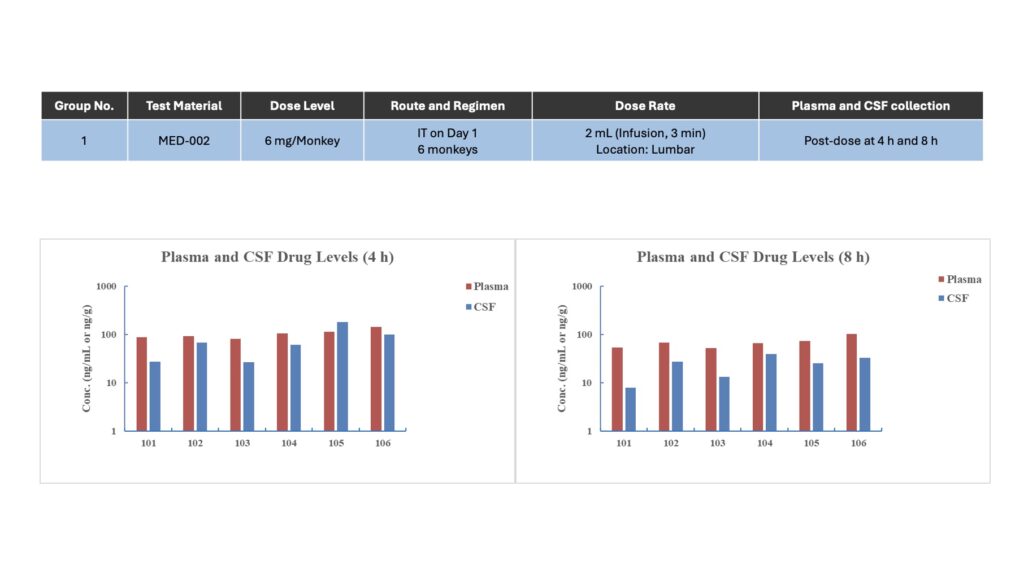
Such robust procedures highlight the quality of our Large Animal DMPK Services, especially for CNS-targeting therapies.
Typical Study Workflow and Timelines
A typical collaboration for Large Animal DMPK Services includes:

1. Study consultation and design
Clarify program goals, regulatory needs, and species selection
2. Protocol development and review
Dosing strategy, sampling scheme, surgical requirements, and endpoints
3. Study execution and monitoring
In-life phase conducted by experienced animal technicians and veterinarians
4. Bioanalysis and data processing
LC-MS/MS or ELISA-based quantitation, QC checks
5. Reporting and scientific discussion
Draft and final reports, data interpretation, and next-step planning
Global Communication and Support (China & USA Teams)
With Medicilon USA Corp based in Lexington, MA, and large animal facilities in China, sponsors receive:
Local communication and project management support
Efficient coordination across time zones
Seamless integration of Large Animal DMPK Services with broader preclinical offerings
Frequently Asked Questions (FAQs)
Have questions about Large Animal DMPK Services?

What are Large Animal DMPK Services?
Large Animal are non-rodent studies that evaluate drug absorption, distribution, metabolism, and excretion (ADME), as well as pharmacokinetics and non-GLP safety in species such as dogs, monkeys, and mini-pigs. They help predict human exposure, support dose selection, and fulfill regulatory requirements.
Which large animal species can Medicilon support?
Medicilon can conduct Large Animal DMPK Services in beagle dogs, cynomolgus monkeys, mini-pigs, and other small animals such as mouse, rat, guinea pig, and rabbit when cross-species comparisons are required.
Can Medicilon run both small molecule and biologic studies in large animals?
Yes. Our Large Animal DMPK Services cover small molecules, peptides, proteins, ADCs, siRNA, oligonucleotides, and other new modalities. We combine in vivo studies with in vitro ADMET and specialized bioanalysis to support diverse pipelines.
Do you offer radiolabeled mass balance studies in large animals?
Medicilon supports studies with 125I, 14C, and 3H radiolabeled compounds to assess metabolism, tissue distribution, and mass balance in large animals as part of our Large Animal DMPK Services. Isotope tests can be conducted on small animals in our own facilities. Large animals need to be outsourced due to the different requirements of radioactive licensing facilities.
How does Medicilon ensure animal welfare and data quality?
Our facilities are AAALAC-certified, and all studies are conducted under strict animal welfare and ethical standards. Experienced teams, validated procedures, and robust bioanalytical methods ensure high-quality, reproducible data from our Large Animal DMPK Services.
Can Medicilon perform liver or muscle biopsies in large animal studies?
Yes. Medicilon has established liver, skin, adipose, bone marrow, lymph nodes and muscle biopsy techniques in monkeys and dogs, enabling serial tissue sampling for oligonucleotide, siRNA, and other modalities. These biopsy-based Large Animal DMPK Services support deep PK/PD correlation at the tissue level.